
Bare Metal Server vs Hypervisor
Choosing the right infrastructure is one of the most important decisions for any business or developer. Two of the most common approaches are bare metal servers and hypervisor-based virtualization.
This guide explains both in detail, compares their architectures, and shows why bare metal remains the best option for performance-critical workloads. It also explains why DarkVPS bare metal servers are a strong choice.
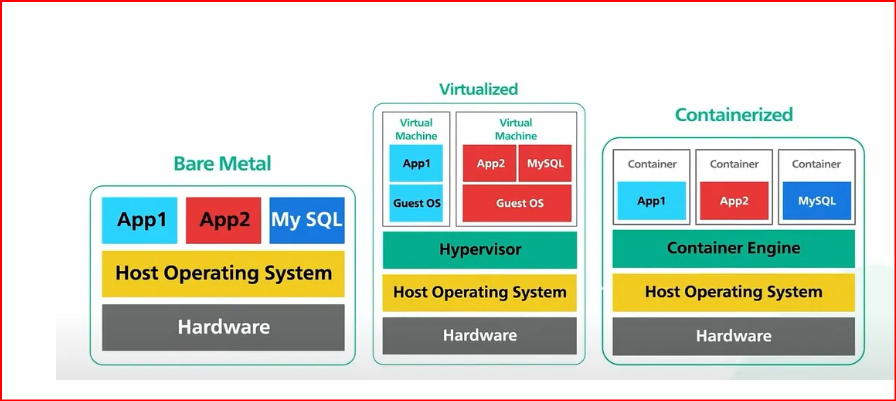
What Is a Bare Metal Server
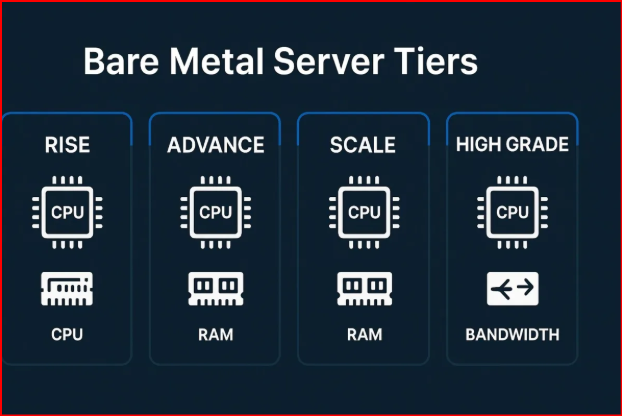
A bare metal server is a physical machine dedicated entirely to one user. There is no virtualization layer, and the operating system runs directly on the hardware.
This means the CPU, RAM, storage, and network resources are not shared with anyone else.
Key characteristics:
- Single tenant environment
- Direct hardware access
- One operating system (or multiple if you install virtualization yourself)
- No abstraction layer
Because of this, bare metal servers provide maximum performance and stability.
What Is a Hypervisor
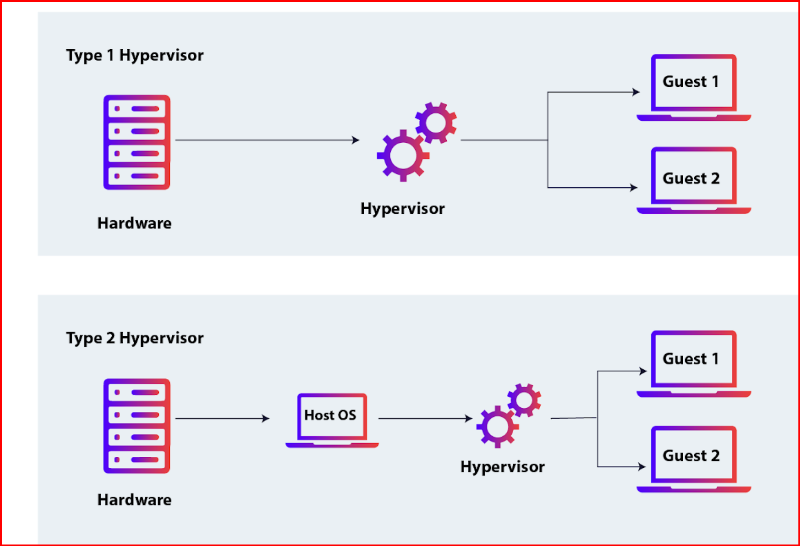
A hypervisor is software that allows multiple virtual machines to run on a single physical server.
Each virtual machine has its own operating system, but they all share the same hardware resources through the hypervisor.
There are two main types:
Type 1 hypervisor
Runs directly on hardware (examples: VMware ESXi, KVM, Hyper-V)
Type 2 hypervisor
Runs on top of an operating system (examples: VirtualBox, VMware Workstation)
The main goal of a hypervisor is to increase hardware utilization and allow multiple environments to run on one machine.
Architecture Comparison
Bare metal architecture:
Application
Operating System
Hardware
In this setup, there are no intermediate layers between the operating system and the hardware.
Hypervisor architecture:
Application
Guest Operating System
Hypervisor
Hardware
In this case, the hypervisor sits between the operating system and the hardware, introducing an additional layer.
Performance Differences
Performance is one of the biggest differences between bare metal and hypervisor environments.
Bare metal:
- Full access to hardware resources
- No virtualization overhead
- Direct disk and network access
- Stable and predictable latency
Hypervisor:
- Resources are shared between virtual machines
- CPU and memory must be managed by the hypervisor
- Additional overhead from virtualization
- Performance can vary depending on other workloads
In real-world scenarios, bare metal consistently delivers better throughput and lower latency, especially for high-demand applications.
Resource Allocation
Bare metal servers give you complete control over all resources. You can fully utilize CPU cores, memory, and storage without interference.
Hypervisors divide resources among multiple virtual machines. This allows flexibility but can lead to resource contention when multiple VMs demand high performance at the same time.
This is commonly known as the noisy neighbor problem.
Security and Isolation
Bare metal servers provide strong isolation because only one user has access to the machine. There is no shared environment, which reduces attack surfaces.
Hypervisors rely on software isolation between virtual machines. While modern hypervisors are secure, they introduce additional layers that could potentially be exploited.
For sensitive workloads, bare metal is generally considered more secure.
Scalability and Flexibility
Hypervisors are designed for scalability. You can create, clone, or delete virtual machines quickly. This makes them ideal for development environments or cloud platforms.
Bare metal servers require manual scaling. Adding more capacity usually means deploying new physical servers.
However, bare metal offers consistency and reliability that virtualization cannot always guarantee.
When to Use Bare Metal
Bare metal is the best choice for:
- High-performance databases
- Machine learning and AI workloads
- Game servers
- Real-time applications
- High-traffic websites
- Security-sensitive systems
These use cases benefit from direct hardware access and stable performance.
When to Use Hypervisors
Hypervisors are suitable for:
- Hosting multiple small applications
- Development and testing environments
- SaaS platforms
- Cloud infrastructure
They are ideal when flexibility and resource efficiency are more important than raw performance.
Why Bare Metal Is Still the Best Choice
Bare metal eliminates the limitations introduced by virtualization.
You get:
- Full hardware performance
- No shared resources
- Consistent and predictable behavior
- Complete control over the system
For serious workloads, this level of control and performance is essential.
Why Choose DarkVPS Bare Metal Servers
DarkVPS provides infrastructure designed for users who need performance, control, and privacy.
You can explore their servers here:
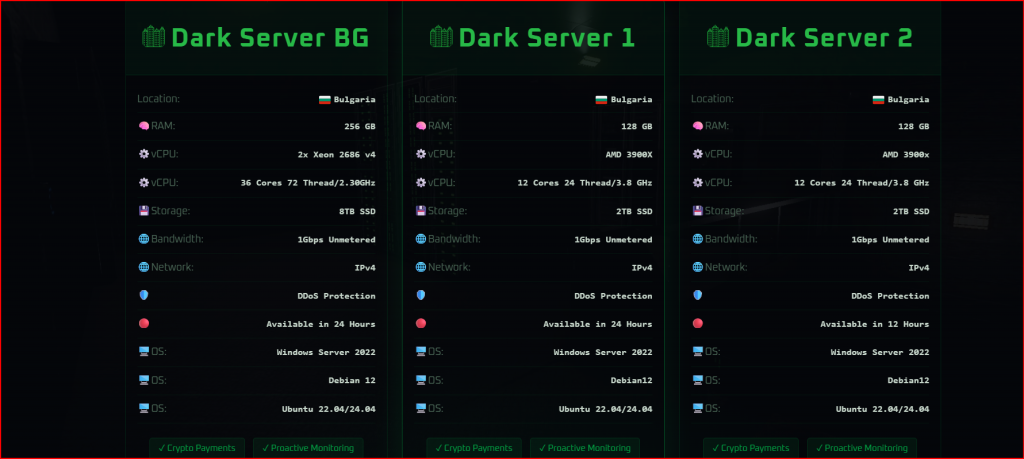
Dedicated Hardware
DarkVPS offers true bare metal servers with no virtualization. All resources are dedicated to you, ensuring consistent performance without interference from other users.
High Performance Configuration
Their servers are built with powerful CPUs, large memory capacity, and fast SSD storage. This allows you to run demanding workloads such as automation systems, high-traffic platforms, and compute-intensive applications.
Full Control
You get complete administrative access. You can install any operating system, configure your environment, or even run your own hypervisor if needed.
This level of control allows you to build your own infrastructure exactly as you want.
Privacy-Focused Hosting
DarkVPS supports privacy-oriented use cases with offshore hosting and flexible payment options, including cryptocurrency. This makes it suitable for users who prioritize anonymity and data independence.
Network Reliability and Protection
Their infrastructure includes strong network performance and protection against attacks. This helps keep your services stable even under heavy load.
Fast Deployment
Servers are deployed quickly, allowing you to start working without long delays.
Final Conclusion
Bare metal servers and hypervisors serve different purposes.
Hypervisors provide flexibility and efficient resource usage. Bare metal provides maximum performance, stability, and control.
For demanding applications and serious workloads, bare metal is the superior choice.
DarkVPS combines dedicated hardware, privacy, and performance, making it a strong option for anyone looking to run reliable and powerful infrastructure.